What the research says.
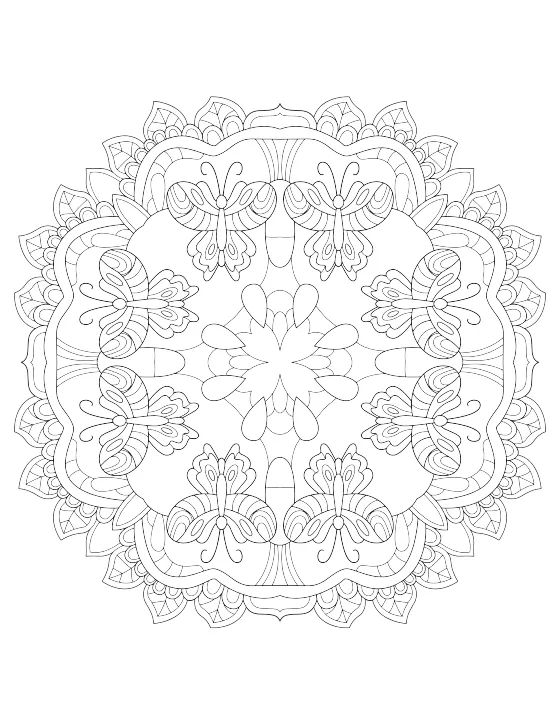
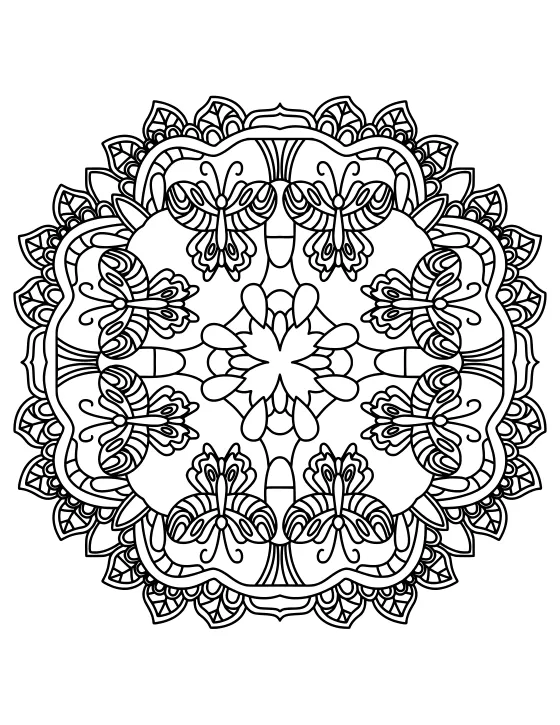
The effects are small to moderate. This is not a treatment.
No card, no calls. Downloads right away.
What it's for
The point isn't a finished picture; it's an hour of feeling useful, with something to talk about.
Coloring is not a substitute for medical care.
“Which patterns did you love: quilts, lace, tile, or wallpaper?”
What each one found
In trials, structured coloring lowered anxiety. People who were made anxious, then colored a ready-made design, calmed down more than people given blank paper. A 2012 study found the same. Why every page is a complete drawing, ready to color.
Curry and Kasser, 2005; van der Vennet and Serice, 2012
A week of daily coloring lifted mood. 104 university students colored or did logic puzzles every day for a week. The coloring group reported feeling less anxious and down; the puzzle group did not. Why the library is built for every day.
Flett et al., 2017: 104 students
Similar results in adults 55 and over. A review of trials of mandala coloring and drawing in adults 55 and over found less anxiety and depression than in comparison groups, though the reviewers rated the evidence as weak. Why the patterns stay in the library.
A meta-analysis of randomized trials, Frontiers in Psychology, 2026
Talking about the past helped a little. Across 22 trials, reminiscence therapy (talking about the past) brought small, uneven benefits for people living with dementia, clearest for quality of life in care homes. Why every page has a Story Starter.
Woods et al., a Cochrane review of 22 trials, 2018
Higher contrast is easier to see. Faint lines are hard to see for many people living with dementia. In one study, men in long-term care ate more from high-contrast plates than from white ones. In another, people with Alzheimer's recognized letters better when the contrast was raised. Why Bold has thicker, darker lines and fewer tiny details.
Dunne et al., 2004; Gilmore et al., 2005
Three steps, about an hour
- Print both versions of the same drawing, Regular and Bold, on plain letter paper.
- Hand out a page or two to each person, wherever they are: the table, a lounge chair, a bedside.
- Read the Story Starter aloud while they color. Then wait.
Bold has thicker lines and fewer tiny details, easier to see and easier to finish. Everyone colors the same picture.
Start with 6 free coloring pages
The First Pack: six hand-drawn pages, one in Bold too, with your organization’s name on the cover and a Story Starter on each.
No card, no calls. Downloads right away.
Good to know
What is a Story Starter for?
It's one question to read aloud while they color, so there's something to talk about. It's about their own life, never a quiz. If the room is happy and quiet, skip it.
Which version should each person get?
Choose by the person and the day. Regular suits a long, quiet sit. Bold has thicker, darker lines and fewer tiny details, so it's easier to see and finish. Same picture either way, so no one gets "the easy page."
Will people find it childish?
We draw for adults: gardens, cats, lighthouses, sailboats, teacups. There's not a cartoon in the library.