What to talk about on a visit
For families and volunteers: easy questions with no wrong answer, and a drawing to share so the visit has something in the middle.
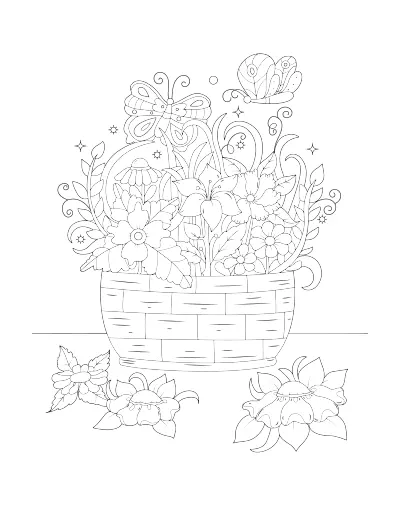
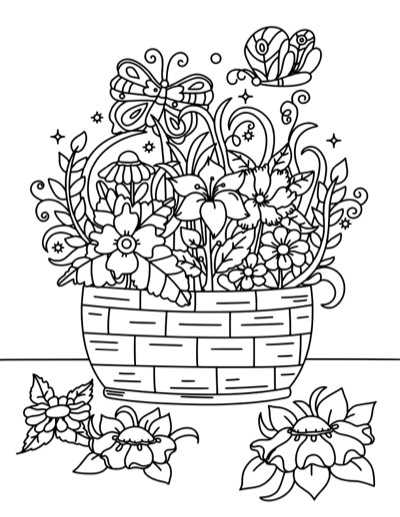
The easiest thing to talk about on a visit is something you're doing together, and the easiest questions are the ones with no wrong answer. Bring a coloring page for each of you, ask about the picture, and let the talk wander from there.
This is for anyone who visits: a grandchild, a son or daughter, a neighbor, a volunteer. You don't need a plan. You need one page and one good question.
Bring something to do together
Sitting face to face with nothing to do can turn a visit into an interview. A drawing changes that. You both have somewhere to look and something to do with your hands, and the quiet stops feeling empty.
Print the same drawing twice, once in Regular and once in Bold. Bold has thicker lines and fewer tiny details, easier to see and easier to finish. Let the person you're visiting pick first. Bring a few colored pencils and something firm to color on, like a clipboard or a big book.
If the place you visit uses Tablewell, ask the activity staff for two copies of a page. They can print as many as they need.
Start with a question about the picture
Every Tablewell drawing comes with a Story Starter, one question written for that picture. Basket of blooms asks, "What's the best place you've ever had a picnic?" Its follow-ups are "What always went in the basket?" and "Who came along with you?"
Read the question once, then start on your own page. You don't need an answer right away. A question about a picture is easy to take or leave, and that's what makes it easy to answer.
Easy questions for any visit
About the picture
- What's the best place you've ever had a picnic? (Basket of blooms)
- When the apple tree was loaded, who got the extras? (Apple tree and baskets)
- Would you rather be out on a boat or watching from shore? (Sailboat)
- Watermelon: did you eat it with a fork, or spit the seeds? (Picnic by the sea)
- What color should we make this part?
About back then
- Who was the best cook in your family, and what did they make?
- What did you do for fun on a Saturday?
- Tell me about a job you liked.
- What song would you put on if we had a radio here?
- What's the best advice anyone ever gave you?
About now
- What's the best thing on the menu here?
- Which chair gets the best sun?
- What should I bring next time?
- Morning or afternoon: when do you like visitors?
- What should we color next time?
Questions about now matter as much as questions about the past. A visit isn't only for remembering. It's for being together today.
Questions to skip, and what to say instead
Some questions sound friendly but feel like a test.
- Instead of "Remember when we went to the lake?" say "I was thinking about the lake today. I loved that trip." Tell your own story. Don't ask them to prove theirs.
- Instead of "What did you have for lunch?" ask "What's the best thing on the menu here?" Lunch has a right answer. A favorite doesn't.
- Instead of "Do you remember my wedding?" try "What makes a good wedding: the dancing, the food, or the cake?" Ask about, not whether.
When you arrive, say your name and how you know each other, even if you think it isn't needed. It takes the guessing out of the first minute, for both of you.
If you're bringing children
Children are good at this. Give them their own page and let them read the Story Starter aloud. A question from a child sounds like curiosity, not a quiz. Pick a picture with something to spot, like the sailboat or the watermelon, and let them ask which color it should be.
If you're a volunteer
When you visit someone you've just met, you don't have family stories to lean on. That's fine. Start with the picture and the questions about now. Asking about the best thing on the menu, or the sunniest chair, is a good way to get to know someone. The stories come later.
When it goes quiet
Quiet isn't a visit going wrong. Keep coloring. Say one thing about your own page: "I'm making the basket blue." Then wait. Count to ten in your head.
If nothing comes, that's fine. Hum a song you both know, or read the follow-up question aloud. Sitting side by side, coloring, is still a visit.
When a story comes out different
If a story comes out different from last time, go with today's version. The point is the telling, not the facts. Correcting a story ends it. Following it ("Where did you go after that?") keeps it going. There's more on this in How to ask about the past without putting anyone on the spot.
Ending the visit
End with the page. Sign and date both of them. Ask if they'd like to keep theirs, give it to someone, or hang it up. Take yours home if you like.
Then say when you'll be back, and what you'll bring. "Next time, the sailboat" is a good way to say goodbye.
If the place doesn't have pages yet
Activity staff can get the First Pack, six drawings with a Story Starter on each, free, with their organization's name on the cover. Send them this page. Or give the whole library: a year of Tablewell is $149 for one location.
Free coloring pages for your activity calendar: tablewellpages.com/free