Setting up the coloring table
Pencils, markers and crayons compared, and a five-minute setup that makes the rest easy.
The best coloring supplies for a care setting are thick colored pencils, a cup of chunky crayons, and a few markers saved for cardstock. Add plain letter paper, good light from the side, a firm surface, and a sharpener that catches its shavings, and the table is ready.
None of it needs to be fancy or bought from a special catalog. What matters is how each tool behaves on the page. Here's how they compare.
Colored pencils: the everyday choice
Colored pencils are the tool to start with. They work on plain copy paper, they don't bleed, and they're easy to control in small shapes.
A few things to look for:
- Soft cores. A soft core lays down color with a light touch. A hard core needs pressing, and the color still comes out pale.
- Thick barrels. A wide pencil is easier to hold than a thin one. Triangle-shaped barrels sit well in the fingers and don't roll off the table.
- Enough colors to choose from, but not so many that choosing takes all hour. A cup of a dozen or so is plenty.
Pencils have one drawback. They need sharpening, and a dropped pencil often breaks inside. Plan for that, and they'll carry most of your activities.
They suit Regular pages with fine detail and a long, quiet sit.
Crayons: big shapes, quick color
Chunky crayons are thick, sturdy, and need no sharpener. They put down color fast. Peel one and use its side, and a whole sky fills in a few strokes.
The trade-off is control. Wax is hard to keep inside small shapes, so crayons belong with Bold pages and big open spaces.
One more thing. A crayon box with cartoon art on it says "school." Put the crayons in a plain jar or a mug from the kitchen, and they're just another tool on the table.
Markers: bright, but plan for them
Markers give the brightest color with almost no pressure. That makes them a favorite for some people and some pages.
They come with three rules:
- Print on cardstock. On plain copy paper, markers bleed through and can stain the table.
- Choose water-based ink. It washes off hands and sleeves more easily, and it doesn't have a strong smell.
- Broad tips for big shapes. A fine tip on a big shape leaves streaks.
Markers are at their best on a Bold page with large open areas, like Sailboat. On a dense page like Butterfly in a bed of flowers, pencils work better.
The three at a glance
| Colored pencils | Chunky crayons | Markers | |
|---|---|---|---|
| Pressure needed | Light, with soft cores | Medium | Almost none |
| Paper | Plain copy paper | Plain copy paper | Cardstock |
| Small shapes | Easy | Hard | Hard with broad tips |
| Upkeep | Sharpening | None | Caps on, or they dry out |
| Best with | Regular pages | Bold pages | Bold pages, big shapes |
Grips and barrels
Thick beats thin, every time. If your pencils are thin, slip-on foam or rubber grips make any pencil wider and softer to hold. They're cheap, so keep a handful in the supply bin.
Short pencils are hard to hold. When a pencil gets down to a stub, retire it. Keep a few of each kind of tool on the table so people can pick by feel.
Paper
Print on letter paper, the size every office printer takes. One drawing per sheet, one side only. Keep a few extra copies of each page, so a second try is always easy.
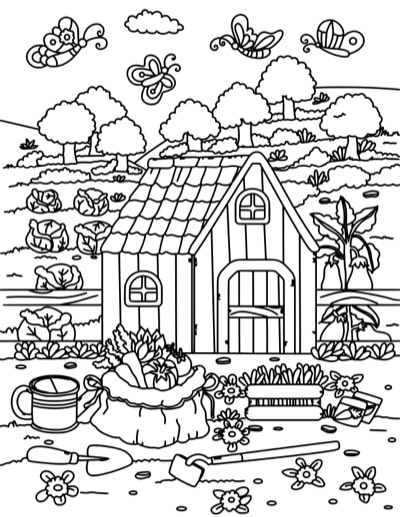
For markers, switch to cardstock. And if a Bold page comes out gray, check the copier. Choose "Text," not "Photo," and turn off toner save. Bold should print solid black.
Light
Good light makes every line easier to see. The best light comes from the side, opposite the hand that holds the pencil. That way the hand doesn't throw a shadow on the page.
Seat people with a window beside them, not in front of them. Close the blinds a little if the sun hits the table directly. For coloring in a room, a desk lamp on the tray table helps more than the ceiling light.
Shiny tables bounce light back up. A plain cloth placemat under each page fixes that.
A firm surface
On a soft surface, paper wrinkles and a pencil point pokes through. A hard tabletop is best.
For anyone coloring in an armchair or a bed, use a clipboard or a lap tray. A clipboard holds the page still, too. On a slick table, a strip of tape at the top corners keeps the page from sliding.
Sharpeners
Get a sharpener with a cover that catches the shavings, and with two hole sizes, one for thick barrels. Then sharpen everything before the activity starts. A cup of sharp pencils on the table beats a line at the sharpener halfway through.
The five-minute setup
- Print the same drawing in Regular and Bold, plus a few spares.
- Set out a cup of sharp pencils and a jar of chunky crayons. Add markers only if you printed on cardstock.
- Bring clipboards for anyone not sitting at the table.
- Check the light. Move a chair or a lamp if you need to.
- Have the Story Starter ready to read.
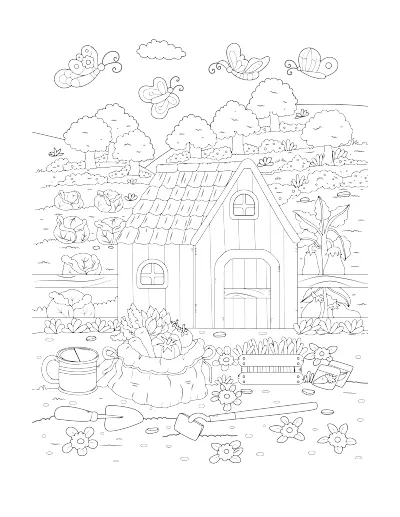
For Garden shed and tools, shown above, the Story Starter is "Was there a shed, garage, or workbench where you liked to putter?" It suits a table set out with tools. Read it once, aloud, then pick up a pencil yourself.
Start with six pages
You already have most of what you need. Want pages to go with it? The First Pack is six drawings with a Story Starter on each, free, with your organization's name on the cover. You can read more about printing and paper.
Free coloring pages for your activity calendar: tablewellpages.com/free