When someone says coloring is for kids
Four ways to answer without arguing, and a grown-up drawing to start with.
When someone says coloring is for kids, don't argue. Call the page by its subject, start with a grown-up drawing and a question about it, let them watch first, and never push.
That's the whole approach. The rest of this piece is how it sounds at a real table.
They may have a point
Start by taking the objection seriously. Most coloring pages they've seen probably were for kids: cartoon animals, smiling suns, a box of crayons with a clown on it. If that's the picture in their head, "for kids" is a fair review.
There's also the feeling of being handed crayons and told to stay in the lines. After a long life of running a kitchen, a shop, a classroom, or a crew, that can sting. It isn't stubbornness. It's dignity.
So the answer isn't to win the argument. It's to change what's on the table.
Call it by its subject
The word "coloring" carries most of the problem. Leave it out.
Say "I've got a sailboat here," not "Would you like to color?" Say "We're doing the ocean today," not "It's coloring time." On the activity calendar, list the subject, too: "Boats and the shore" reads very differently from "Coloring."
A few other swaps help:
- "A drawing" or "this page," not "a coloring sheet."
- "Which blue would you use for the water?" not "Stay in the lines."
- Say what you see, not "good job." "That's a deep blue" is something you'd say to a friend.
Start with a grown-up drawing and a question
The page you put down first matters more than anything you say. Pick a subject an adult would choose, drawn the way an adult would draw it.
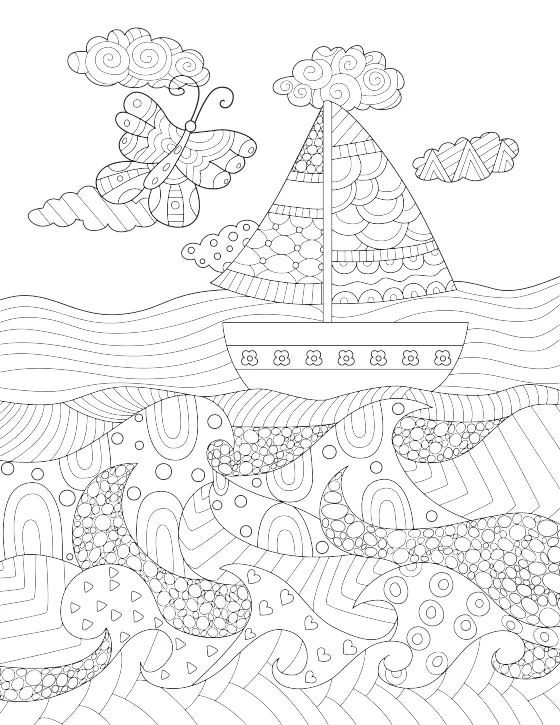
Sailboat, shown above, is a good first page. It's one boat, some waves, and a few clouds. Lay it down and read its Story Starter to the whole table: "Would you rather be out on a boat or watching from shore?"
Notice what that question doesn't ask. It doesn't ask anyone to color. It asks for an opinion, and everyone has one. Someone who won't touch a pencil may still have plenty to say about boats.
A few more good first pages:
- Ocean waves: "Fishing: did you love it, or just tag along?" If that gets a smile, follow with "Tell me about the biggest fish, or the one that got away."
- Butterfly mandala: "Which patterns did you love: quilts, lace, tile, or wallpaper?" A careful pattern can look more like a quilt block than a kids' page.
Let them watch first
Joining doesn't have to start with a pencil. Offer a seat at the table with no page in front of it. Or set a page nearby with no comment at all.
Watching is a way in. Some people listen to the question for a few weeks before they pick up a pencil. Some never color, and still come every week for the talk. Both count.
You can also ask for help instead of asking them to color. "Which color should the sail be?" "Would you read the question today?" Being asked for an opinion is a different thing from being asked to do an activity.
When "for kids" means something else
Sometimes the objection covers a different worry. "That's for kids" can mean "I don't know anyone at that table." It can mean "I'm not sure I'd do it well," or "Those lines are hard to make out from here."
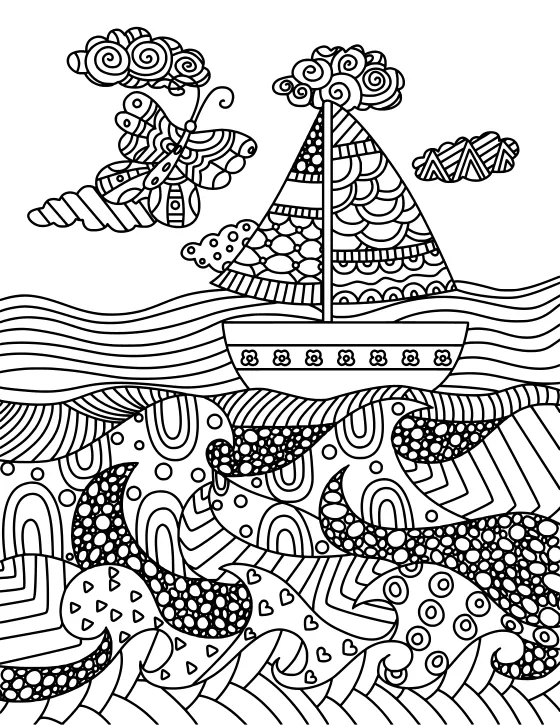
You can answer all three without naming any of them. Invite them to sit by someone they already talk to. Say there's no right way to color a page, and mean it. And keep a Bold copy of the same drawing on the table, so it's there if they want it.
Color your own page
Sit down and color, too. Staff and volunteers coloring their own pages change the feel of the table. It stops looking like a class and starts looking like people passing an afternoon.
Every drawing comes in Regular and Bold. Regular has every line and detail, for a long, quiet sit. Someone who thinks coloring is childish may want exactly that: a page that takes real care to finish. Bold is the same drawing with thicker, darker lines and fewer tiny details. From across the table, they're the same picture, so nobody is handed "the easy page."
Never push
Ask once. Then leave a page and a pencil within reach, and let it be.
- "No, thank you" is a full answer. Next week, ask again, the same easy way.
- Don't sell it. "It's good for you" turns a pastime into a chore.
- Don't make a fuss when someone who said no picks up a pencil. Just pass the colors.
- Some days it's a no, and that's fine. Read the Story Starter anyway. The question works without the page.
Things you can say
Keep a few easy lines ready:
- "No need to color. Come for the question."
- "I'll leave this one here, in case."
- "Which color would you make the water?"
- "Sit with us a minute. Somebody always has a story."
None of these ask for a yes. That's what makes them easy to hear. For more on asking questions that nobody can get wrong, read How to ask about the past without putting anyone on the spot.
Start with the right pages
The fastest way past "it's for kids" is a page that clearly isn't. The First Pack is six drawings with a Story Starter on each, free, with your organization's name on the cover. You can see more about how the questions work.
Free coloring pages for your activity calendar: tablewellpages.com/free